Amphitheres
Most people believe that amphitheres are a type of feathered dragon. This is incorrect; amphitheres and dragons are completely unrelated taxonomically and dissimilar in biology. It would be more accurate to say that amphitheres are to birds what dragons are to lizards. They are the birds that encompass all – the bird which all other birds reflect, poorly.
Imagine a glimmering specimen with feathers of deep, pure, scintillating, and searing color, almost painful to look upon. It can be any color – verdant green, solar yellow, vermillion red are commonly imagined, but even the drab browns and greys are, on the amphithere’s wings, alluring and punishing at once. Imagine many sets of those wings, staggered across their long snake like bodies, terminating in a long, swishing tail. The wingspans can be wide as a valley or narrow as a galley is long, but certainly you should envision something you could stand on. Do not imagine legs of any kind; these are the lesser appendages of the fallen avian races. Finally, imagine vestigial, redundant biologies. Multiple sets of eyes. Bizarre fractal feather crests. Beaks with acoustic gaps, beaks within beaks, or fused together top-to-bottom or reflected across the coronal plane. Spare nostrils on shoulders, or ringing each eye. This is the crowded, obscene physiognomy of an amphithere.
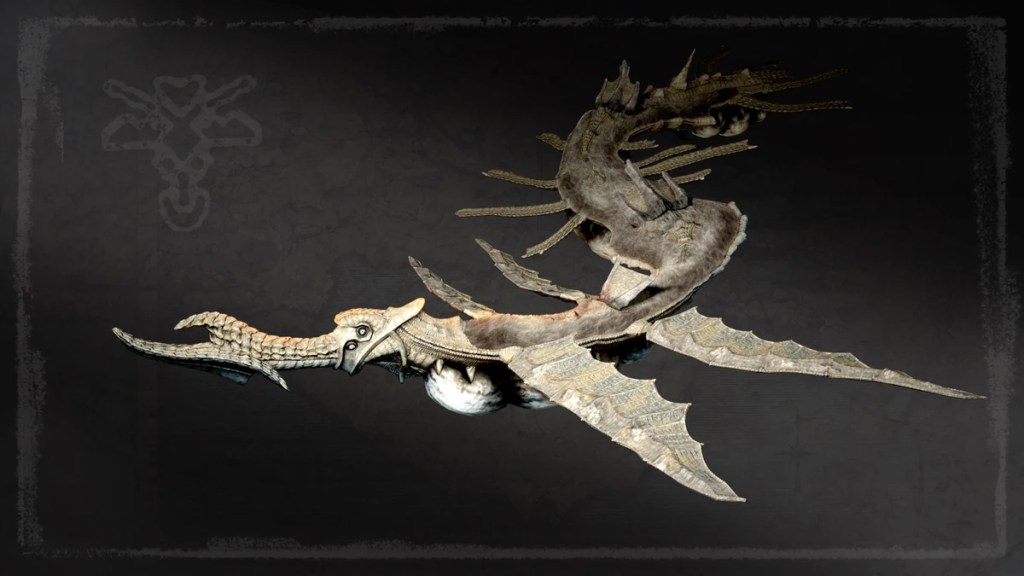
Most humans will never see an amphithere in person. They spend their entire life in flight at altitudes that place even their absurd wingspans out of human sight. They subsist on the magical and solar energy of the uppermost atmosphere, and typically descend only to deposit their eggs while gliding over mountaintops. Their occasional forays into the lower atmosphere for non-reproductive reasons are inscrutable – no one has ever communicated with an amphithere successfully, and in-flight dissection by wizards have proven they lack anything resembling a brain. The eggs are fertilized by other eggs deposited by amphitheres, and then coalesce and ascend after a few weeks, during which time birds of prey, mountain gorillas, and yak-bears gorge themselves on the rich, luminescent yolks.
Sometimes, the eggs remain unfertilized by another amphithere or uneaten by earthly predators. In such case the eggs ascend, but remain forever in egg form. If the eggs were trapped under land, the land will simply float up with them and fossilize within their bulk. This appears to be the buoyant mechanism of most floating islands. Mighty kings, ambitious adventurers, and mad wizards gather eggs and moved them under particularly appealing hills and rocks to create their own islands, though this was more common when the amphitheres were more numerous.

No one knows what amphithere childhood and adolescence looks like. Interplanetary travel, frolicks with godlings, and transformation into clouds are all popular theories. There isn’t any evidence that adult amphitheres come from eggs, or that the eggs they lay are eggs at all. The adult amphitheres just appear, and are mostly located by coincidence. Most amphitheres are only ever seen once, unless they frequent a particular peak or range. In some places the movement of amphitheres are regular enough to suspend hanging platforms from them to quickly move people and cargo from peak to peak. The speed of this transport is offset by the difficulty of boarding and de-boarding, as well as the occasional calamities when an amphithere’s path strays. If you happen to see a huge mound of dirt built up on the side of a mountain, chances are that’s a brake and you should not camp near it.
Obviously, people worship them. The most notable example are the towns of the Vermillion Peaks are named after the feathers deposited by three amphitheres that visit sporadically, and are named in the native language One, Two, and Three. Complex divine and royal genealogies, cosmology, and a vast corps of priests all surround these three creatures that, as far as anyone can tell, have never once acknowledged human existence. The feathers that fall from the amphitheres quickly disintegrate into nothingness. Anything that falls from amphithere disintegrates into nothingness, and when amphitheres die they themselves disintegrate into nothingness. Perpetual, uniform motion is the life and being of an amphithere, and the surest way to kill one is to drive it to the ground, where it can no longer move. Since their entire body will also disappear, there isn’t really a reason to do this, except to capture their song – more on that later. You can preserve a piece of an amphithere if you keep it moving (or keep wind moving past it) and the amphithere is still alive. This is enormously expensive to do, so it’s only done by wizards and the ultra-rich nobility. Shifts of servants working large fans is the most popular solution.
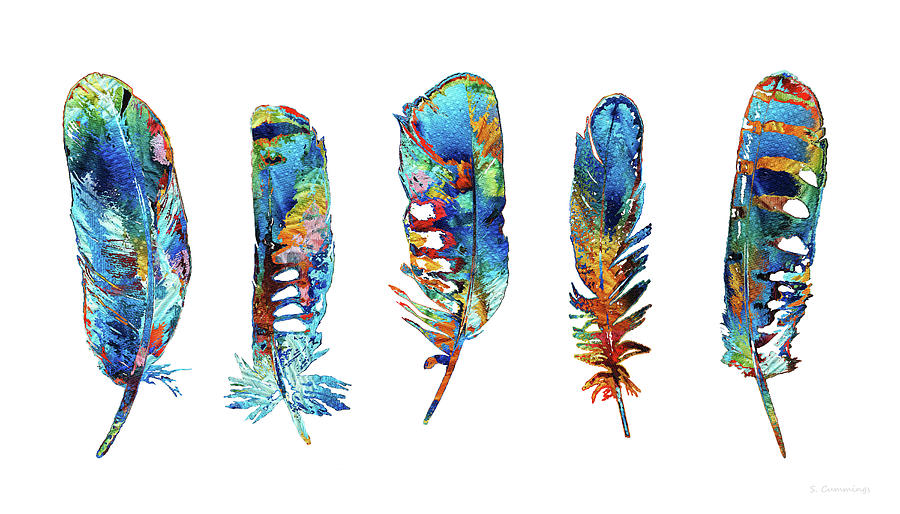
Of course, every once in a while, someone will try to capture an amphithere’s song, which would necessitates killing one. This is because the being of an amphithere is encapsulated in its song – you could just as easily call it the creature’s soul, and muting them is another, possibly** quicker way of killing them, though you’ll lose the song in the process. Philosophers and holy men say that amphitheres are nothing more than the music of the rarefied air given form, a body around a melody.
Trying to capture an amphithere’s song is a bad idea, and idiomatically a stand-in for acts of hubristic overreach. The affects of an amphithere’s song on humans are varied but typically include depression, madness, and hallucination, and have included mutation, disappearance, transmutation, and sudden death. It depends on the amphithere – thankfully most of them are singing too quietly or in frequencies too alien to the human ear to have much affect. That isn’t to say there haven’t been incidents, or that they’re too dumb to use the song defensively. The most successful amphithere hunters either trick them into landing and killing themselves, which isn’t actually that hard to do – finding and reaching one is usually the harder part. Then you just need a necromancer to keep the song from dissipating.
The utility of an amphithere’s song is potentially limitless, but in fact hampered by it’s unpredictability. The song can alter reality, because anything an amphithere sings is true. Unfortunately, getting an amphithere to ‘say’ anything coherent is difficult and requires tremendous will. It’s a coin flip whether it does something completely random or something kind of similar to what the user intended. Even then, expect strange side affects, or for their wish to be perverted as if misheard or granted by someone with a poor command of the language. The most reliable use is to just release the song in the direction of an advancing army – you won’t know exactly what will happen but chances are high the army will not survive it. Some smaller kingdoms, bedeviled by belligerent neighbors, are known to have done this in the past, and to keep songs on hand for this very purpose.
** The sound of an amphithere’s song doesn’t propagate normally, and is actually pretty difficult to block by means other than distance.
Ceiling Ghouls
It’s a common and mistaken belief that ghouls were all paupers, desperate starving folk that turned to dead or dying flesh out of necessity. This is more true in the present day, but at one time ghoulism was rich man’s disease. The powerful of old kingdoms long since overthrown did not shun the taste of flesh, but embraced it willingly. To consume their fellow man was holy, invigorating, and – with the aid of the profane magicks of bloodworks – empowering. The cannibal kings of old were stronger, smarter, more tireless, longer lived than ordinary men, all owing to these rites.
Ghoulism is a form of magical disease, not unlike mummy rot. It generates itself in the corpses of humans, and remain dormant unless introduced to a living host. As the host consumes more human flesh, the disease worsens, increasing their cravings and interfering with their ability to digest other types of food. Nothing but flesh is nourishing to a ghoul. The hunger eventually becomes all consuming – the ghoul can’t focus on anything if it’s hungry. Animal meat will keep them upright and moving, but furiously hungry nonetheless – only human flesh will sate them. They lose higher reasoning abilities and speech, but tend to retain a low cunning that aids their hunts. Around this time they will also most likely die from hunger, and gently transition to undeath, although the disease itself will make them undead allowed to progress. If they go without any meat for too long, they’ll be paralyzed by the hunger, forced to sit and wait with a single claw poking up from the ground.
Or rather, that’s what they do if they’re poor, unlearned, or unrefined. The noble ghouls of old did not muck about in the dirt, waiting for the feet of commoners to tread on their manicured hands. In moments of temporary embarrassment where meat couldn’t be had and/or creditors were pursuing them, the proper thing for a ghoul of means to do was to wedge yourself into the corner of the ceiling, or hang on the wall above a doorway, or perhaps dangle near a roof’s edge. This serves the same purpose as burying yourself – any movement below (ideally of the aforementioned creditors) and the ghoul would drop, where they can take a bite and start moving again.
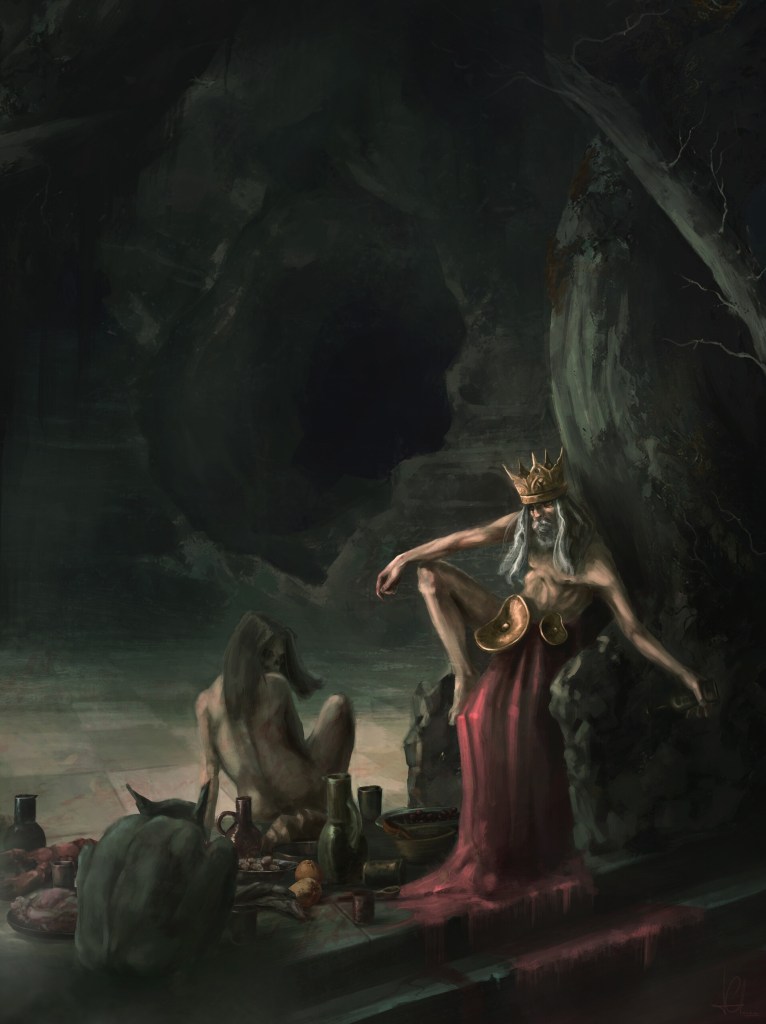
Back in the day virtually everyone on the upper rungs of the social ladder fell to ghoulism, and because of the great expense of human meat, many of them defaulted on their debts. Having a bunch of hungry, unreasoning, and poor ghouls around is inconvenient to the well-fed, thinking, and well-monied ghoul, so the nobility of old set up prisons to hold their less fortunate peers, cousins, brothers, uncles, and sons. Most of these are now extremely dangerous places to visit, on account of all the paralyzed ghouls. Most of the prisons afforded a ration of animal meat to keep their prisoners from going totally paralytic – once a ghoul goes into that state, there’s a chance they’ll never be able to regain their higher functions, even if well fed. Some more ‘humane’ prisons even kept their ghouls on partial human rations. Ghoulism itself was treated as a disease, the downside of the cannibalistic rituals so commonly practiced, a rich man’s disease like gout. It was fashionable in those days to put off ghoulism as long as possible by eating only the freshest meat, or eating younger people, including children. Long-term, it wasn’t really avoidable, but because the only real benefit to ghoulism is the immortality, it was best saved for the twilight years, if possible.
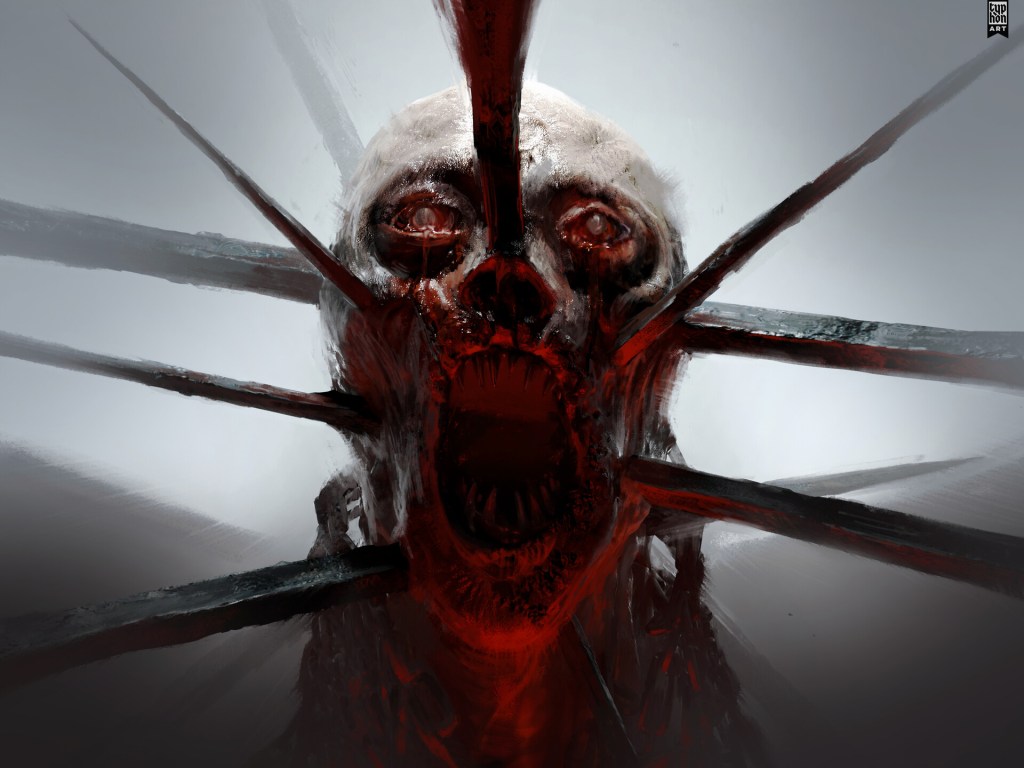
The only ghoul-prison that still functions is Kijkan, a dreadful series of tunnels near the magma layer. The constant sweltering heat is supposed to speed the decay of the imprisoned ghouls’ minds. In the old days, Kijkan was the worst prison to send a ghoul too, for the ghouls that were politically inconvenient, well-disliked, or too dangerous and clever to contain elsewhere. The ghouls sent here were really meant to starve, and ideally have their flesh melted on to the walls of their prison. As cannibalism and ghoulism became less acceptable, more ghouls were sent to the worse prisons, Kijkan included. Eventually it was the only one anyone would accept as a prison, since it’s so far from other people. A lot of the nobility in the times of the royal cannibals have noble descendants to this day. Every year a few scions of noble and burgher houses, second or third or fourth sons looking for a quick route to power, or out of youthful rebellion, our out of sheer ennui partake and/or form cannibal cults. They rarely succeed – most of the rituals for gaining power through cannibalism have been lost and replaced with hearsay purposefully spread by certain security minded organizations. Their goal is to prevent the emergence of a powerful cannibal, and especially to prevent them from turning into an empowered ghoul – a ghast.
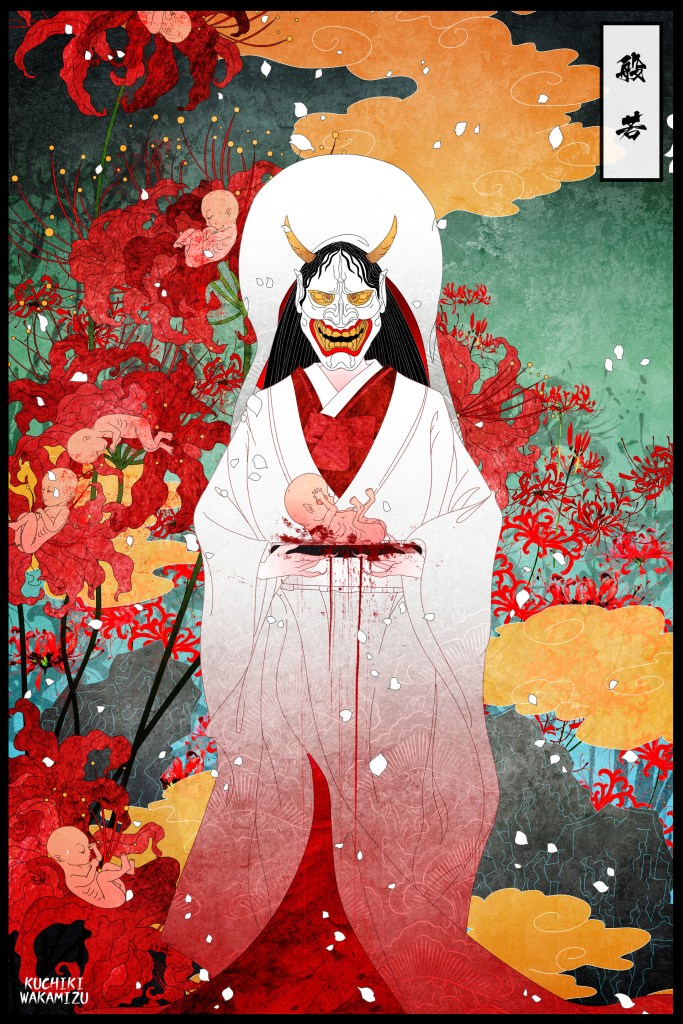
But you don’t need to worry about that. Just remember if you run into a ghoul, it might not be advisable to kill them immediately. There’s a decent chance they’re related to someone important, especially if they’re well-fed. Try and capture them instead, it could be the difference between a grateful duke or baron and an extremely pissed off one. Kijkan even gets regular shipment of food and corpses. Nobles bequeath incomes to them as a form of charity. Some still see ghouls as basically unfortunate, victims of society. Many ghouls themselves think this way, and work to make sure all ghouls are well-fed and nonferal. Obviously, they feed themselves first, but they’ll frequently provide human meat to other ghouls. It’s probably impossible for a ghoul to act in a truly compassionate or altruistic manner (at least as far as meat is concerned) so most of these ‘charitable’ ghouls will require service in turn, and become ringleaders, in addition to the usual opportunists. Their ghoul followers are attracted to their comparative trustworthiness in sharing out meat, though of course it all goes out the window once the shortages get dire. Until that time, these ‘sage’ or ‘wise’ ghouls are more trustworthy than most human monarchs. And that comparison isn’t accidental; the social form is stable enough to form the occasional ghoul kingdom.
Leylines
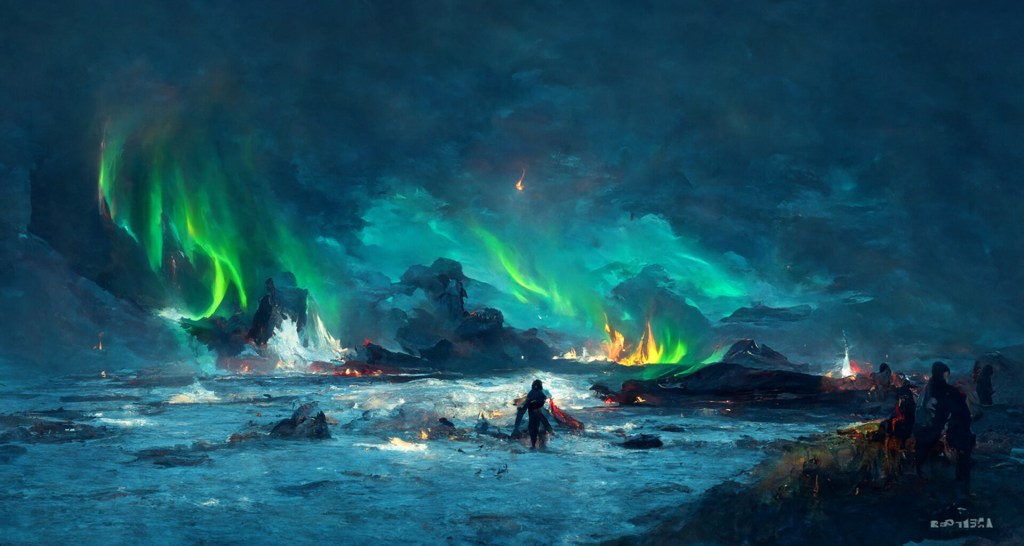
Leylines are being of pure, sublime light. They are usually invisible to humans and frequently permeable to all forms of matter. They form great loops and arcs in the seas, under the earth, and formerly through the skies of the ring, their magic burning aurora into the night sky. Their paths through the heavens left crystalline-metal spires reaching out of the earth, as if trying to touch them. Ampitheres and dragons and spirits of the great Empty Air feasted painlessly and ceaselessly on their bodies. Geographic enormities followed in and beneath their wake. Rivers bent their course to match them. Mountain ranges strained higher to touch them. Island chains migrated and widened to fit more of themselves beneath their divinity.
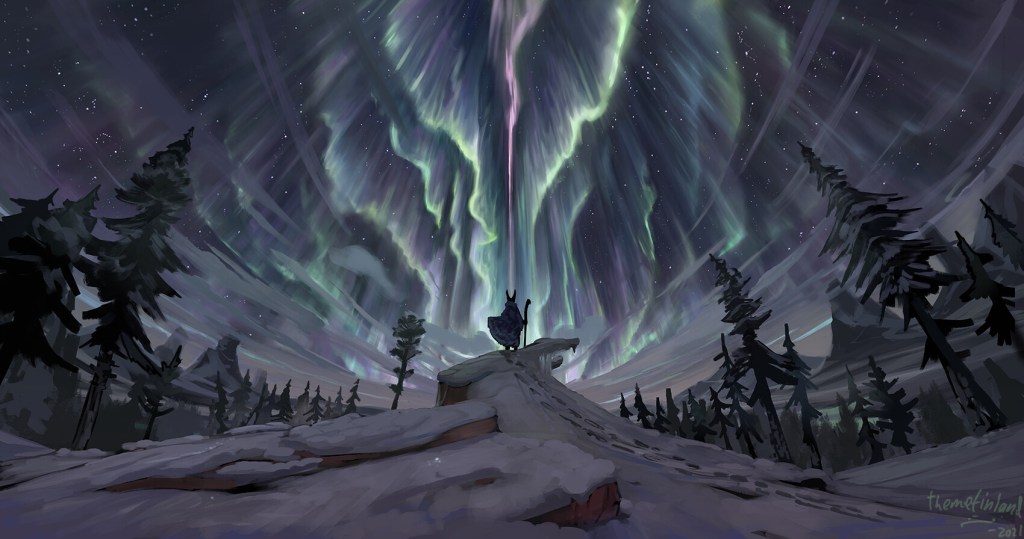
Leylines were worshipped by the druids, who also drew upon the leylines to power their spells. Once druidism was the most popular form of religion, followed by practiced in near infinite variations by local circles Depending on the reach or location of the leyline, some circles spread across kingdoms or continents, while others were confined to a single glade or spring. In those times, it was druids and not wizards that were the most common magic-user, having the support or fear of the common people, and the ears of kings.
Leylines live in a single splendid instant. Time does not move for them, and in fact it is aptly said that time does not exist for them. Their creation, destruction, and everything in between is compressed into a singularity of existence, from their perspective. In fact, they are being entirely unaware of themselves, but nonetheless provably alive, as they respond to their environment and have something like wills or desires. The timeless nature of their being and consciousness makes them the foremost dispenser of prophecies, though perhaps one in a billion humans are capable of ‘listening’ to a leyline. And of course, the visions and sensations they receive are frequently difficult to interpret, sometimes seem to not come true, or to in fact be sensations of the distant past. They are, in essence, hallucinations, and most druidic religions have an ecstatic element and seek out altered states of mind through ritual drug use.
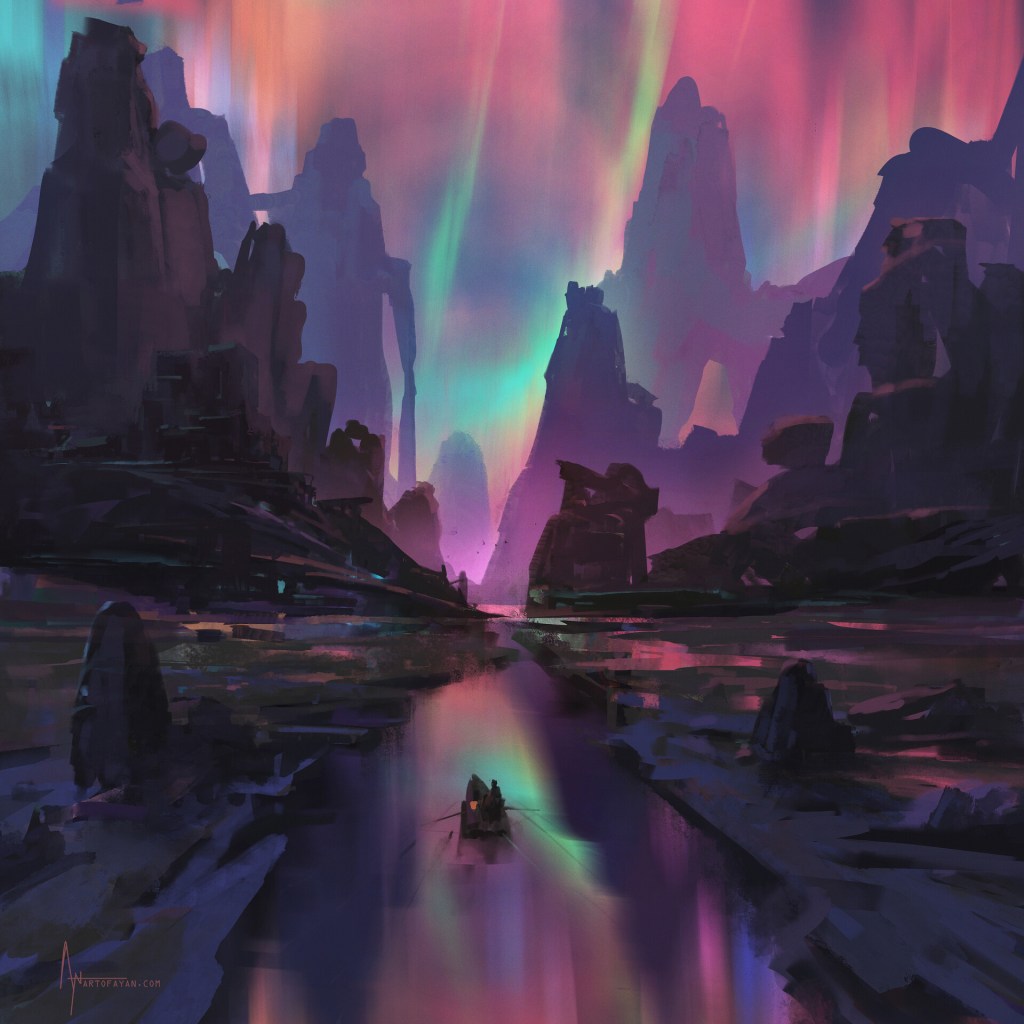
The body of the leyline always forms a loop. The energy that comprises their being is no thicker than a strand of hair, and constantly shifting slightly in location. Circles are common, and great circles are the most famous and powerful leylines that run the entirety of the ring’s (or the planet’s) circumference. Other shapes include arcs, which are basically the outline of a banana or saddle in three-dimensional space. All orientations and altitudes are possible. To humans, the energy appears to surge around the ring in varying frequencies – these appear to vary with weather conditions and the leyline’s ‘mental’ state. Any druid past their apprenticeship can feel leyline frequencies innately. Most druids can only draw power from the leylines nearest the surface, while directly under, above, or within their bounds. Within range of their leylines, the druids were immensely powerful, but without they were nothing more than wizened men. The druids that learned to draw power from the great circle leylines could work magick anywhere, but accomplishing such a feat required decades of training in a “lower” druidic order – no Great Druid under the age of sixty has ever been anointed.
Observing a leyline directly is difficult, and touching it nearly impossible, even if you can get near it. Despite this, they have as tremendous effect on the world around them. Many druid orders believed that the leylines weren’t the strands of energy that they sometimes feel, but the changes in the worlds the leylines made and that the strings are just reflections of their true being, perceptual infill for the gaps in human understanding. To these druids, the leylines were an effect without a cause. And it was quite an effect, as mentioned. They redirected rivers, raised pillars of crystal, changed the courses of mountain ranges. Animals and plants were drawn to them, and grew faster, taller, and healthier. Their energy imbued and birthed the nature spirits, and of course drew the druids to wild places, where they learned to practice their magic. Some think that druids shun cities (and some do) but in truth druidism most likely predates urban living. Because of their reality altering presence, leylines are rarely found in cities, or more properly, cities are rarely built near leylines. Most druids practiced a careful indifference to cities, before the war.
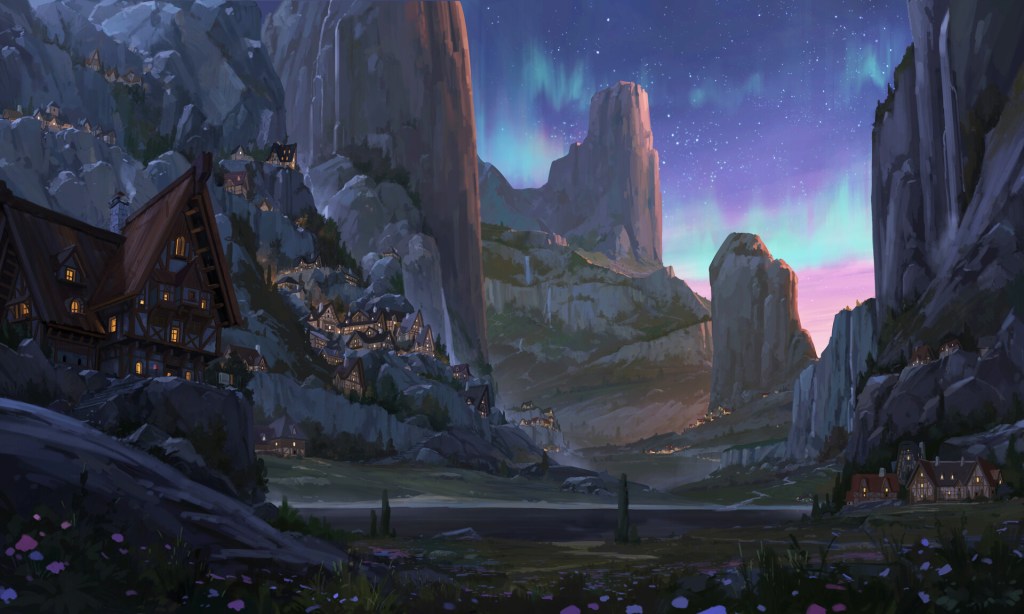
Of course, all of that doesn’t really matter any more. All the leylines that once inhabited the surface or atmosphere are dead or fled, into space or underground. Their druid orders were killed off, or followed the leylines into the dark earth, or became wizards, or simply relied on temporal or spiritual power from then on out – many modern religions have their roots in druidism. All of this can heaped at the feet of the wizards of course, and the Fourth Wizard-Druid War, the other three being mere trifles in comparison.
To explain this, I have to digress a bit, and explain the differences between different types of casters. The main distinction is the source of a caster’s magical power. A sorcerer gets their power innately. A druid draws it from a leyline. Magi draw their power from communion***. And wizards draw power from their panoply (and indirectly from the world itself). In theory, everything else is interchangeable. You can cast druid spells with a panoply, or cast wizard spells with a leyline – this was the cause of the war.
Digression: The different sources of power change the philosophy of the casters. For example a druid would never natively research or learn a ‘Detect Magic’ spell, because to them magic is part of nature. It would be like a physicist trying to research a ‘Detect Atoms’ – of course the atoms are present. A wizard would learn or research such a spell because they consider magic separate from mundane reality. Also, the various different classes of magic users weren’t exactly in a rush to share their spells with others. Over time, each type of caster has mimicked each other’s spells, leading to ‘wizard,’ ‘magus,’ and ‘druid’ versions of spells that originally belonged to someone else. The cross-cultural exchange didn’t end there. The staff, now the most popular type of focus in wizard panoplies, was originally engineered as a magical instrument by druids. The staves would allow them to carry a small amount magical power out of the influence of their leylines.
The wizards grew envious of the druids and their leylines. They wanted that power for themselves, and conspired to seize it from an early age – no one is sure when. By the time of the fourth war believed they had a method to do so. To avoid having to fight master druids on their home turf, the wizards employed every dirty trick and subterfuge possible. Assassination, pillaging, stoking internal strife, using kings as pawns, divide and conquer – no holds barred. They managed to get their hands on a few leylines early on, and while their plan didn’t function as well as they hoped (it frequently ‘killed’ the leyline), the power granted was still enough to make it all worth it.
The war was godawful. At the end of the century and a half it took, the population of the wizards was not one-tenth what it had been. All the leylines were either destroyed or fled underground or into space. The druids were all but extinct, with a few bedraggled remains fleeing underground. The general population fared little better. The war spilled into mundane politics, and the decline in crop yields as the leylines took flight killed a third of the world. Some lands reverted entirely to waste, or desertified. Earthquakes, storms, rendings of the very ground and other prodigies followed their departure. The spirits of nature went berserk: killing, rending, falling into senescence. Amphitheres starved and plummeted to the earth, crushing towns beneath their bulk. Of course, all of that isn’t even mentioning the horrid magic released in the course of the war itself. These events are some of many reasons all reasonable people hate and distrust wizards. This is also why wizards still have a (mostly deserved) reputation as power-hungry malfeasants.
The wizards claim this all quite misunderstood by the historical record. They say that the druids, not the wizards, induced the leylines to flee when they realized the war was lost. As for the adoration heaped on the druid orders of old, they claim that this is propaganda and lionization, made more convenient by the druidic orders’ absence, and they might be right. Detractors of wizards claim that the real goal of the war was to displace the druids politically, and if that’s the case, the wizards certainly won. Now any count, duke, or baron of sufficient income maintains at least one court wizard. Wizards Ordinary march with armies. The religions that once were founded by druids now contract church wizards. Wizards have even split the world amongst their universities. The loss of the leylines was in fact the greatest boon of the wizards.
*** Communion is the practice of drawing the innate (but limited) magical power from trained slaves. Incidentally, the magi also got screwed. See Dominions wiki for more.
Categories: Uncategorized
 Profane Ape
Leave a comment